The house buying process can be long and challenging, but it’s well worth it in the long run to purchase your dream home. To help you get there quicker, it’s worth thinking about what questions to ask when viewing a house or flat.
Bricks&Logic has a vast database of national property price analysis and information, available for both the general public and property professionals, to inform your questions.
To run through what to ask when viewing a house or apartment, let’s imagine that we are interested in buying a flat on Chapeltown Street in Manchester, as an example. The asking price is £240,000.
How long has it been on the market?
If the property has only recently come onto the market and looks impressive during your viewing, there’s a chance you’ve found a real gem. If you’re interested, make sure to carry out your due diligence and consider making an offer promptly, as desirable homes like this tend to sell quickly.
But if the property has been listed for some time, this doesn’t necessarily mean there are problems. In some cases, sellers may be open to negotiating the asking price, especially if no acceptable offers have been received after several months on the market.
Typically, properties in the UK go under offer within a few weeks or months, but many can remain unsold for longer depending on location, pricing and market conditions.
Is there a property chain?
A chain is where the buyers and sellers’ purchases depend on another sale happening first. There are a few different possible outcomes here and of course, whether you are in a chain or not is a factor too.
For example – if the seller is moving and has already found somewhere new to live, they may be in more of a rush. It’s less likely that your buying process will slow down due to the chain, as you’re not waiting for the previous owners to find another property.
However, if their next purchase falls through, they may decide not to go through with selling their original property to you anymore. Then again if the owner isn’t moving, then they may not be in a hurry to sell and less likely to negotiate on prices.
Either way, it’s useful to know whether there’s a chain or not and what it looks like, so you can plan ahead accordingly.
Why is the owner selling?
There are lots of valid reasons why homeowners may want to sell their property. The property you’re interested in may not be what they need anymore, but that doesn’t mean it’s not right for you.
They may need something bigger or smaller, be going through a change in life circumstances, or just want to live in a different area. If you get the impression that they need to sell quickly, that could strengthen your negotiating position.
However, if their reason for selling is also a reason why you wouldn’t want to buy, that’s worth knowing upfront. Examples of ‘red flags’ to watch out for include any signs of structural issues and a property going back on the market shortly after a sale – why is it for sale again so soon?
How long has the seller lived there?
Try to find out from the estate agent if the owner has reduced the asking price since the property went on the market.
It’s useful context for several reasons. For example, if the asking price has decreased, it may mean you could get a bargain – it’s as if the property has just entered the market. Demand may quickly increase at this new lower valuation.
In terms of making an offer, on the one hand, it’s less likely the owner will entertain any underbids if they’ve already lowered the price recently. On the other hand, lowering the asking price could mean that the owner wants to sell quickly, strengthening your negotiating position

Has the asking price changed?
Try to find out from the estate agent if the owner has reduced the asking price since the property went on the market.
It’s useful context for several reasons. For example, if the asking price has decreased, it may mean you could get a bargain – it’s as if the property has just entered the market. Demand may quickly increase at this new lower valuation.
In terms of making an offer, on the one hand, it’s less likely the owner will entertain any underbids if they’ve already lowered the price recently. On the other hand, lowering the asking price could mean that the owner wants to sell quickly, strengthening your negotiating position
Has the owner received any offers yet?
This is another good indicator of demand. If another potential buyer has submitted an offer that hasn’t been accepted yet, but you’re interested too, express your interest quickly.
In contrast, if the owner hasn’t received any offers yet, you have more flexibility. You can decide for yourself how quickly you need to act and how high or low to go with your first offer.
Note that in some cases, the estate agent may decline to answer this question. They represent the seller, so it may not be in their interest to reveal that the property has received no offers yet, for example.
Similarly, while they should not lie, be wary that some estate agents may imply that a property is more in demand than it really is.
Is the property leasehold or freehold?
In most cases, houses will be freehold and flats will be leasehold, but not always.
Freehold is more straightforward, because that means you own the land and building. But for leasehold properties, it’s worth asking a few follow-up questions.
- How much is the service charge and ground rent?
- Is the freeholder planning any development work?
- How long is left on the lease?
This last one is very important – the general consensus is that if there are under 90 years left on the lease, you need to renew it, long before the number approaches 80 years left. If you need to renew the lease, the cost (thousands of pounds, on average) will vary depending on how many years are left.
Bricks&Logic has lease length estimations. In our hypothetical example, the Chapeltown Street flat has a long lease. Using a Bricks&Logic Pro account, we can see that the 999 year lease only began in 2004, so there are 978 years remaining at the time of writing.

Can I see the boiler?
This is one of the most important things to look for when buying a house or flat. Older boilers can be costly to replace when the time comes, so it’s worth choosing a property with a modern boiler if possible.
If you think the boiler may need replacing in the near future, it’s worth checking the latest government policy in case it will affect the property you’re planning to buy.
For example, there was a planned gas boiler ban in place but this has been cancelled recently. The ban that was set to be introduced in 2035 will now only apply to new properties.
Can I turn on the taps?
Ask this question to get a sense of the water pressure. Usually, the estate agent or seller won't mind and may even be happy to demonstrate for you.
Running the taps can reveal possible plumbing issues, water pressure problems, or hot water supply failures – all things you want to spot before making a decision about making an offer.
What is the EPC rating?
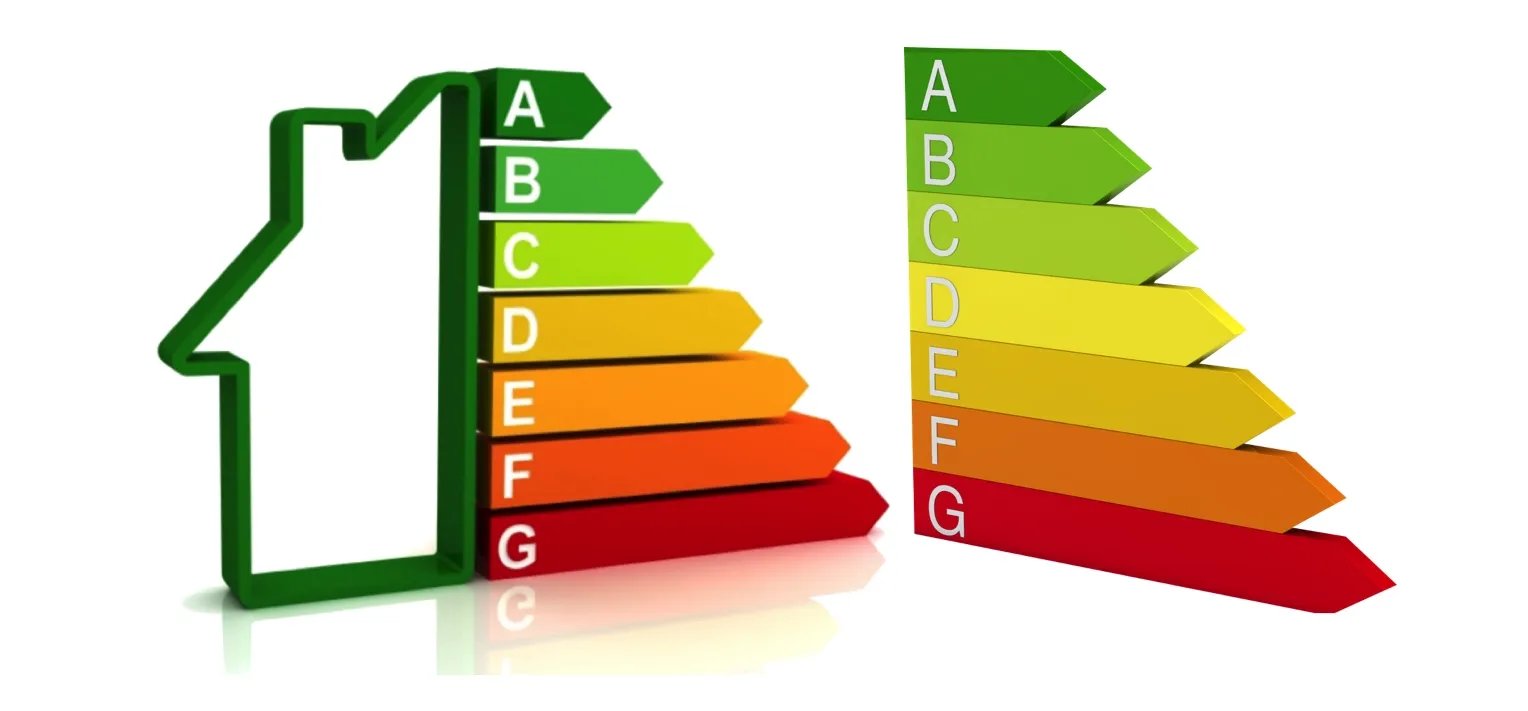
Introduced in 2007, the Energy Performance Certificate (EPC) is very important information. It rates a property’s energy efficiency on a scale from A (high) to G (low).
It tells you how energy efficient the property is. That will impact how much you pay for energy or how much you may need to spend on improving the property’s heating and insulation.
Bricks&Logic provides data from the Ministry of Housing, Communities & Local Government on property heating type, hot water, lighting and insulation. For example, the flat we’re interested in has good roof and wall insulation, plus double glazed windows, but very poor heating which may require upgrades.

What’s included in the sale?
Think about what items you plan to bring to your new home. If you already own your own ‘white goods’ (such as the fridge, freezer or washing machine) and want to bring them, ask whether the owner is planning to leave theirs behind; otherwise, you could end up with unwanted duplicates.
Many buyers are interested in keeping the white goods they see during a viewing. However, be aware that the owner might intend to take these appliances with them, in which case you’ll need to purchase your own.
While it’s less common for sellers to leave furniture, if there’s something you’re interested in, it’s fine to ask about that too.
Have there been any renovations?
A recently renovated home might offer the modern features and up-to-date finish you’re seeking and could save you from spending extra money on upgrades.
However, if significant work has been carried out, it’s wise to do some of your own research beforehand for reassurance.
You could check your local planning authority’s website to look for information about any major renovations that have taken place.
How old is the property?
The age of the property can reveal potential advantages and issues associated with the building. Older properties might feature unique architectural details or period charm, but they can also come with challenges such as the need for more frequent repairs.
You can better assess the likelihood of upcoming maintenance, the urgency of any potential upgrades and future ongoing costs in addition to the initial purchase price that might arise by knowing the age.
Additionally, the property's condition can influence its market value. Bricks&Logic shows you how a property’s value could change based on its condition.

Which way does the property face?
Before picturing how you’ll enjoy your mornings and afternoons in the new home, find out which parts of the house get sunlight at different times of day.
An east-facing property will let you enjoy the sunrise, while a west-facing one gives you views of the sunset. This will also affect the temperature throughout the house, making some rooms warmer or cooler.
South-facing gardens are especially sought after because they receive sunlight for most of the day when the weather is good.
How much is the council tax?
The rates of council tax vary greatly across the UK and there are noticeable differences between London boroughs as well.
Each property is assigned a specific valuation band, which depends on factors like its previous value and size.
You may qualify for a discount or exemption, but regardless, it’s important to ask in advance how much the council tax will be as part of your property viewing checklist.
Is there good mobile phone coverage and internet speed?
From a mobile signal perspective, this is something you can quickly check on your own at a viewing. Take a moment to look at your phone and see how much signal you have compared to what you have at home.
Bricks&Logic can help you check the broadband speed at the property, using recent Ofcom data. In our hypothetical example, the Manchester flat we’re interested in should have superfast internet speed.

Are there any developments planned nearby?
Nearby developments can affect the appeal and value of a property, even if they don’t physically affect the building.
For example, If you enjoy the current view from the garden, it’s wise to find out if there are any plans to construct large buildings nearby that might obstruct it.
On the other hand, upcoming improvements to local transport links could increase the property’s desirability, making it a smart investment if you decide to buy soon.
Does the property have any restrictive covenants?
Ask whether a property has any restrictive covenants because these are legally binding rules written into the property’s deeds that limit what you can do with the home or land.
For example, this could be because there is a conservation area around the property. Listed buildings also have restrictive covenants.
Restrictive covenants might, for instance, prevent you from getting planning permission to build an extension, putting up certain fences, or running a business from the property. You don’t want to discover, after purchasing, that you can’t make planned changes or use your home the way you hoped.
What are the neighbours like?
Are you seeking a peaceful, quiet neighbourhood, or are you moving with a young family whose children will want to play freely and noisily outdoors?
Learning about the local community’s demographics can help you determine if the area suits your lifestyle and if the property is in the right location for your needs.
Bricks&Logic can tell you the estimated average age of the residents compared to the rest of the region. In this scenario, the average age is 34.5 compared to 32 for the rest of the North West and England & Wales, so it’s a relatively young neighbourhood.
See Fig. 06.

What’s the local area like?
Last but by no means least, ask for further details about the local area. What are its advantages?
With local knowledge, the seller or estate agent may be able to tell you about some benefits that would be difficult to know without having lived in the area for a long time.
But of course, you can find out plenty about the local area online too. In fact, on the Bricks&Logic website you can learn plenty about the area, including but not limited to:
- Nearby schools
- Public transport links
- Nearby home ownership
- Number of second homes
- Average cars per home
- Risk of flooding
See Fig. 07.

Conclusion
We hope this list of questions has helped you think about what to look for when viewing a house or flat.
Answers to these questions will inform whether or not you want to buy the property and if so, how much to offer.
Before writing your house viewing checklist, there’s plenty of information already available at Bricks&Logic – then you can go to the property viewing with a shorter list of questions.
Access vast amounts of data and insights to make more informed property purchase decisions with our customisable heatmaps.
For wider reading, take a look at our recent guides:
- Where Is The Cheapest Place to Buy a House in the UK?
- When is the Best Time to Sell a House in the UK?
If you have any questions for us, please don’t hesitate to get in touch by clicking the email icon below.